Support Services After Strangulation
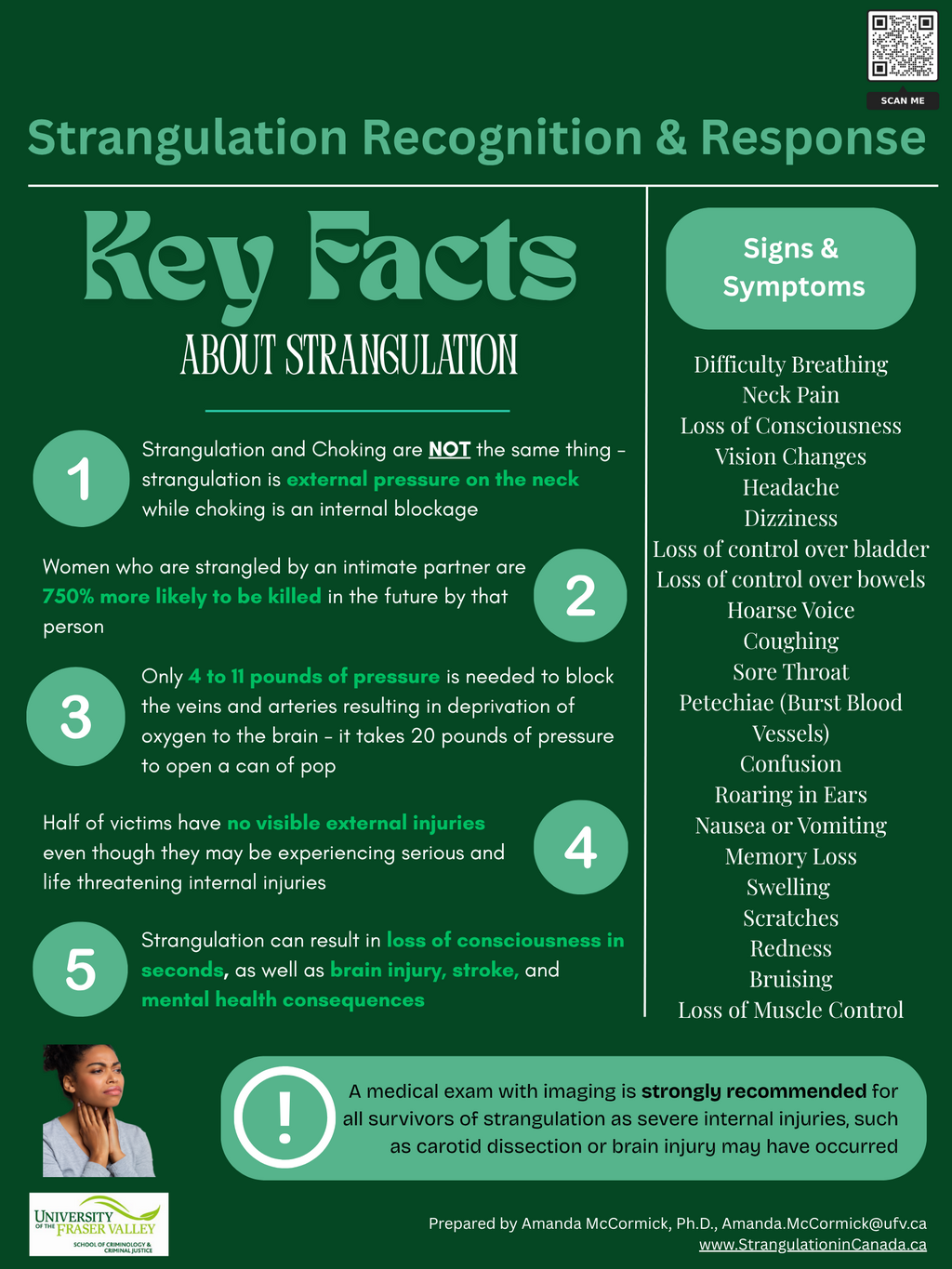
Key Facts
Signs & Symptoms
Difficulty Breathing
Neck Pain
Loss of Consciousness
Vision Changes
Headache
Dizziness
Loss of Control over Bladder
Loss of Control over Bowels
Hoarse Voice
Coughing
Sore Throat
Petechiae (Burst Blood Vessels)
Confusion
Roaring in Ears
Nausea or Vomiting
Memory Loss
Swelling
Scratches
Redness
Bruising
Loss of Muscle Control
Loss of Muscle Control
A medical exam with imaging is strongly recommended for all survivors of strangulation, as severe internal injuries, such as carotid dissection or brain injury, may have occurred.
Recommended Webinars to Watch
The Training Institute on Strangulation Prevention and Hope for Alliance International have created numerous resources to increase and improve strangulation recognition and response.
Click below to watch a few of our recommended webinars.
Strangulation Services Around the World
Training Institute on Strangulation Prevention (US)
In the Know (New Zealand)
Institute for Addressing Strangulation (UK)